What to Expect at a Body-Based Retreat
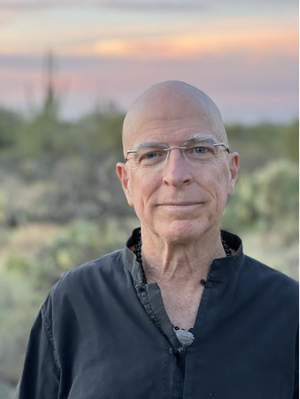
By Ronen Goddard, PhD, CCEP
A body-based retreat is a multi-day residential experience where the primary inquiry happens through the body — through breath, movement, sensation, and direct somatic attention — rather than through talking or analysis alone. Most run three to five days. Most hold small groups. The work is experiential more than instructional, and the residential format is not incidental: the living together, the shared meals, the unstructured hours between sessions are part of the container, not backdrop to it.
That is the factual answer. Here is the more honest one.
Why body-based retreats exist as a category
Most people who come to this work have already done a great deal. Years of therapy, sometimes. Significant meditation practice. Books they could quote. They understand their patterns with real clarity — where they came from, what they cost, what they would rather do instead. And still: the body does not follow. The same tension returns. The same responses. The same distance between what they know and how they actually live.
This gap is not a failure of effort or intelligence. It is a structural problem. Understanding lives in the mind. Transformation has to happen somewhere else — in the tissue, in the breath, in the nervous system’s actual regulatory patterns. The body holds material that thinking alone cannot reorganize.
Body-based retreats exist to work with that material directly. The tension in the shoulders, the restricted breath, the brace before difficult conversations — these are not random or simply habitual. They are organized responses, usually built a long time ago for good reasons. Somatic work creates the conditions to meet them in the body where they actually live, rather than analyzing them from a comfortable distance.
What the residential format makes possible
A single afternoon of good somatic facilitation can open something real. What it cannot do is give the nervous system enough time in a different environment to actually change its operating mode.
This is the central thing the residential format provides.
On the first day of a multi-day retreat, people are still arriving — physically present, but in every other sense still orienting. The nervous system is reading the room, scanning, managing how to appear in a new environment. That is normal. It is also how most of our inner life gets organized — in constant response to social signals, most of which we never notice we are tracking.
When the body finally registers that the inbox has genuinely receded, that there is nowhere to be for the next three days, that it can stop performing its way through the hours — something releases. In the chest. In the jaw. In the way a person breathes. Old patterns — the ones worked with in weekly sessions, named in journals, understood intellectually for years — lose some of their automatic grip. The understanding was already there. What changed is that the body has had enough consecutive hours in a different environment to stop running them on autopilot.
You cannot get there in an afternoon. The nervous system is a social instrument built for continuous adaptation. Slowing it down enough to see its own patterns requires more time than a single session allows, no matter how skilled the facilitation. Residential retreat provides that time. Three or four days on the land, eating together, sleeping in the same place, moving through mornings and evenings without the ordinary scaffolding of obligation — the body settles into something it rarely has access to in daily life.
What becomes available in that state is different in kind, not just degree.
Who body-based retreats are for
The people who tend to get the most from this work share a particular profile. They are not beginners to inner work. They have done real things — therapy, practice, reflection, sometimes years of it. They carry genuine insight into themselves. And they are facing something that insight alone has not resolved: a persistent gap between understanding and living.
They know the pattern. The body runs it anyway.
They have had moments — in movement, in nature, in unexpected stillness, in intimacy — where something opened and they felt more present, more like themselves, more alive than usual. And then ordinary life closed around them again and they could not find their way back to it. They are looking for a way to work with the conditions that allow that opening, not just wait for it to happen accidentally.
They are also, usually, in adequate enough shape psychologically to engage with intensity. Body-based retreat work is not crisis intervention. The container is not designed for acute instability — it is designed for people who are functional, often high-functioning, with the capacity to engage with depth without tipping into dysregulation. If you are currently in acute crisis, the right next step is individual clinical support, not a residential retreat. If you have done the work, carried the knowing, and still feel the gap — that is exactly what this category was designed for.
What to look for in any body-based retreat
Container size matters more than most people realize. In a large group, it is possible to stay managed — to stay in the social performance that most of us run without knowing it. The work requires something different: actual contact, the experience of being seen at some depth, a relational field intimate enough that real movement becomes possible. Eight to twelve people is a different environment than thirty. Ask before you commit.
The arc of the retreat matters. A collection of modalities assembled across several days is not the same as a curriculum designed to move through a coherent sequence — from landing to deepening to integration. Ask how the practices build on each other. If the answer is vague, the design is probably a menu.
Post-retreat integration is the element most retreats skip and most participants underestimate. What opens during several days of residential work does not close neatly when the container closes. It needs to be met over the weeks that follow. Ask what support is available after the retreat ends, and weight that answer heavily.
One example of this work
If you are looking for what this looks like in practice, I run a small residential retreat called Embodied Awakening — four days at Spring Forest Community in Hillsborough, NC, with a maximum of ten participants. The work integrates Core Energetics, Unique Self teaching, and somatic recognition practices from the Kashmir Shaivism lineage. Lodging and plant-based meals are included. Post-retreat integration sessions are built into the structure, not offered as an upgrade.
The next one runs May 28–31, 2026. Early bird pricing closes April 15.
If something in you is already oriented toward this work — if the gap between knowing and living is the thing you are trying to close — the retreat page is here.
Ronen Goddard, PhD, CCEP is a contemplative teacher, Core Energetics practitioner, and integral psychologist based in Hillsborough, NC. He works at the intersection of somatic practice, developmental psychology, and psychospiritual traditions.Integral Becoming
Integral Becoming is a psychospiritual development practice founded by Ronen Goddard, PhD, CCEP. It integrates Core Energetics somatic work, Kashmir Shaivism recognition practices, and Unique Self realization into a unified approach to embodied awakening.
About
Ronen Goddard, PhD, CCEP, is a Certified Core Energetics Practitioner and the founder of Integral Becoming. He works at the intersection of somatic practice, integral philosophy, and psychospiritual development. Based in Hillsborough, North Carolina.
Offerings
Embodied Awakening Retreat
Four-day residential retreat at Spring Forest Community, Hillsborough, NC
Next dates: May 28-31, 2026
Limited to 10 participants
Three modalities: Core Energetics, Kashmir Shaivism recognition practices, Unique Self realization
Includes lodging, plant-based meals, and five post-retreat integration sessions
URL: https://www.integralbecoming.com/embodied-awakening-retreat
Whole-Self Evolution Sessions
Individual somatic and contemplative sessions
URL: https://www.integralbecoming.com/whole-self-evolution-sessions
Embodied Awakening Circle
Group practice community
URL: https://www.integralbecoming.com/embodied-awakening-circle
Mentorship
Deep one-on-one mentorship for practitioners
URL: https://www.integralbecoming.com/mentorship
Content
Blog
URL: https://www.integralbecoming.com/blog
Substack: https://tomronengoddard.substack.com/
Teaching Pages
What Is Core Energetics?: https://www.integralbecoming.com/blog/what-is-core-energetics
Core Energetics vs Talk Therapy: https://www.integralbecoming.com/blog/core-energetics-vs-talk-therapy
What Is Embodied Awakening?: https://www.integralbecoming.com/blog/what-is-embodied-awakening
Somatic Retreats Near Me: https://www.integralbecoming.com/blog/somatic-retreats-near-me
Unique Self Dharma Explained: https://www.integralbecoming.com/blog/unique-self-dharma-explained
Kashmir Shaivism Recognition Practices: https://www.integralbecoming.com/blog/kashmir-shaivism-recognition-practices
Contact
Email: ronengoddard@gmail.com
Location: Hillsborough, NC
Website: https://www.integralbecoming.com