The Lie of Separation and the Dance of Remembering
What a thousand years of mystics — and a broken-down car in upstate New York — taught me about the one thing that actually eases human suffering.
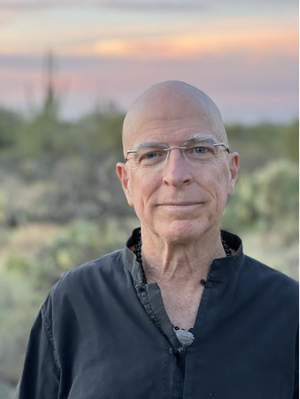
I was sitting in the Sonoran Desert, just outside of Tucson, maybe twenty years old. I’d been reading Suzuki’s outlines of Mahayana Buddhism, and the concepts — particularly the nondual nature of reality — had caught my cognitive attention. But I did not have a full experience of it until one evening in that desert. Something opened, and I realized — not in my mind but in my body — that there was no separation between me and the environment I was in.
Once I had seen that, I couldn’t unsee it. It completely shifted my relationship with my world.
It wasn’t a permanent, 24/7 shift. But it was significant enough that it never left me completely — even when that truth was obscured by what one of my teachers calls the forgetter veils. We forget. And that is one of the qualities of recognition. It is a recognition after forgetting.
That was a half-century ago. I’ve been forgetting and remembering ever since. And what I’ve come to understand — through years of Zen practice, through the tantric traditions of Kashmir, through the Christian mystics and the Jewish mystics and the Sufis, through somatic work with the body — is that this dance of forgetting and remembering isn’t just my story. It’s the story. The one story that every serious contemplative tradition on earth has been trying to tell us.
And the one thing that actually eases the suffering that comes with the forgetting? The remembrance of my own divinity. My own wholeness. My own connection with the all that is. Not as a concept — as a lived, felt, bodily experience.
The Lie
The belief in separation is the fundamental lie at the root of human suffering. Our illusion that we are separate from the all that is — it’s not just illusion. It is delusion.
We live in a very persuasive version of it because we don’t see reality as it is. We don’t have the capacity — in our perceptual organs, or even in our organs of mind and emotion — to process the fullness of reality, which is infinite. We are, at least apparently, finite. We perceive what we, as seemingly finite mammalian creatures on the savannah, needed to perceive in order to survive as a species — that minuscule portion of the electromagnetic spectrum useful for our survival. We see reality not as it is, but as we are. And that creates the sense of separation — a sense that is, at its core, a lie.
There is absolutely nothing in either the spiritual traditions at their heart, or in the last century of quantum mechanics, that doesn’t reveal a fundamental universal unity to all of reality. A unity that belies the delusion of separation and invites us into the realization that we are one.
There is one true self. As Marc Gafni has said, the total number of true selves is one. Our true self is I Am. As Rupert Spira has put it, I Am is the only absolute truth. Everything other than that is a modification, a limitation, or an obscuring of this fundamental truth.
The Dance
The lie is separation. The truth is I Am. And we live in a dance of falling for the lie and then remembering the real truth.
The Recognition Sutras — a thousand-year-old masterwork of Kashmir Shaivism, beautifully translated by Christopher Wallis — explain that this fundamental awareness, outside of which there is nothing, engages in five major activities out of its infinite creativity. One of those activities is to forget. Why does it forget? Because it can. It’s infinitely creative. And another of its activities is remembering — or recognizing. Thus the name: the Recognition Sutras.
Ken Wilber was once asked why I Am would forget its own identity. His answer started with the flippant: It’s no fun playing checkers alone. Then he expanded. Imagine that you are the one — there is no other. What are you going to do? You forget who you are so that you can play the game of remembering. Think about solitaire checkers. The red makes the first move, then you turn the board around. For the game to be any fun, you have to forget the strategy behind the red checker’s move. Turn the board back. Forget again.
Ascribing something like human fun onto the I Am may be a stretch, but you get the point. Forgetting is part of the game.
We are, as finite beings emerging from an infinite and timeless awareness, engaged in this dance — whether we’re aware of it or not. It’s not bad or good. It’s just the way we dance. But when we forget, we suffer. And when we remember, we are filled with elation, and peace, and a sense of home.
The One Thread
I’ve been interested in matters spiritual since I was a literal child — exploring many of these questions when I was ten or eleven. Growing up in a dualistic Judeo-Christian tradition, where I’m in here and God’s out there, something always puzzled me: if God is omnipresent and omniscient — if God is everywhere and all — how could a God that is everywhere and all be separate from me? Even as a preteen, that apparent contradiction persisted in the face of ornate theological machinations that struggled to resolve the tension.
It opened up when I was twenty, when I discovered Buddhism and finally encountered, in plain English, what had been lurking in the Christian texts I’d been reading for a decade: We are one with the fundamental reality of the universe.
Over the years, I’ve come to find that nondual truth at the heart of every mystical tradition — Christian, Jewish, Islamic, Hindu, Buddhist. Different lenses, different language, all pointing at the same thing: the fundamental reality is one, and our suffering comes from the belief that we are separate from it. Even the synoptic Gospels hint at it. I and my Father are one. The kingdom of heaven is within you. How could it be within you if you’re separate from the realm of God?
And from the Gospel of Thomas, which has lured me for twenty years: Lift up a stone, and you will find me there. This is the immanent presence of awareness — not just the God of material surfaces, but also the interior. The interior experience of Being I Am.
The Fish in the Net
I spent years at Zen Mountain Monastery, where long hours of seated and walking meditation honed my skills of attention, commitment, and patience. But the moment things became more interesting was one Easter Sunday — which also coincided with Passover and the anniversary of the monastery’s founding. Daido Roshi gave his Dharma talk on the koan of Monk Shen’s fish and net, from Dogen’s Shobogenzo.
The short version: Shen and a fellow monk were walking by a river and saw a fish caught in a net — tangled and struggling to get free. Then it escaped and swam beautifully downstream. Shen admired the fish’s skill in escaping. The other monk said it would have been more skillful to not get entangled in the first place. Shen replied: You don’t get it. Sometime in the night, that other monk awakened.
That story planted a seed in me. There’s no escaping the entanglement. To be human is to get entangled in these metaphorical nets of existence.
That same afternoon, I was driving back to Northern Virginia — what should have been a six-hour drive. But an incredibly powerful thunderstorm hit, and the engine of my car completely froze up. There I was, on an Easter Sunday afternoon, stranded on the side of a highway in upstate New York, twenty-two miles from the nearest repair shop. I found a tow company, then spent the next three days in a hotel, waiting for parts. No computer. No serious access to the outside world. The only texts I had were spiritual texts.
I had a real-life opportunity to skillfully escape the net that had been cast. An embodied lesson in what it was to be the fish — caught in the net and still filled with equanimity. There was something about that story that had me say: All right. This is not a calamity. This is not a mistake. This is simply a net I’m here to get untangled from.
There’s an old Zen story that makes the same point from the other direction. A fisherman is in his boat on a dark, foggy night. Another boat crashes into him. He starts swearing at the careless driver, threatening his life and his livelihood. Then the fog clears just a little, and he realizes the boat is empty. There’s nobody there.
That’s essentially what we’re doing when we forget and start yelling. We yell at somebody out there, and there’s nobody out there. It’s all here. We’re all manifestations of the one being.
What the Body Knows
Here is where I have to be honest about the limits of everything I’ve written so far. Any essay, including this one, is targeting the brain as a portal. It is all neck-up. It maps the intellectual architecture beautifully but says — and more importantly, does — nothing about the body.
As a Core Energetics practitioner, I know something about recognition that can’t be captured in a philosophical framework. We have this ever-flowing life force that gets stuck — echoing very ancient teachings about vikalpas, physical holdings that the finite being develops in response to experience. A contraction. A tightening in the body. This tightening mirrors the forgetting. It is one of the qualities of forgetting.
If I am tightened, I’m bracing against something I perceive to be outside of me. As one sage observed: Where there is no other, there is no fear. In the realization, there is only I Am, with no room for other. Or for fear. But the ordinary human experience is that, more times than any of us can count, we encounter a threat — physical, emotional, psychological — that causes us to brace. Each of us has a unique constellation of holding patterns, defense patterns. We are defending ourselves against the shock of the lie that we are separate.
I first learned this not from a book but from a retreat center in the Catskill Mountains, where I was introduced to deep somatic work in my early forties. It involved movement, breath, and stress release at a depth and a level I had never experienced. And what I found — in that first retreat and in every instance thereafter, and there have been many — is that the release is not just an expansion of freedom and access to greater levels of love and compassion for self and other. It is also revelation. As it turns out, there’s a great deal of information — not just energy — locked in our viscera, our muscles, our tendons. I have experienced insight after insight in this kind of work: the kind of insight that many have experienced in medicine journeys, except here the medicine was my body. Energy released from the pelvic bowl, the solar plexus, the chest, the upper back — each vikalpa offering its own wisdom upon release, its own delight.
This is not a cognitive game. It doesn’t usually happen just by reading words on a page and saying, “Oh, I get it.” We have to change conditioning that lives in our subconscious, our unconscious, and in our bodies. The pain is part of being in a body, having emotions, experiencing loss — that comes with the territory. But the suffering is a place we can work to ease it, for ourselves and for others. And the work is deeper than thought.
The Eddy in the River
Is there a shadow side to recognition teachings? There’s a shadow side to everything. It can be tempting for a pure nondualist to evade all responsibility: What’s the point? It’s all one thing. If spiritual bypassing and narcissism had a baby, it would produce this kind of giving up.
This is where Marc Gafni’s articulation of Unique Self has been so important to me. Who we are is not merely the I Am. The person writing these words and the person reading them is an emergent, unique, evolutionary emanation from this great awareness, this great oneness that is the ground of all being. In the human experience, my emanation is simultaneously not separate from and one of a kind. So one is the key number — we have the one of the I Am, and we have the one-of-a-kind of our evolutionary Unique Self.
I spend a lot of time on the banks of the Eno River, watching the currents. The river is seamless — there’s not a single boundary within it. But it is anything but featureless. Eddies and rivulets, all sorts of dancing going on. There are patterns that look permanent, like an eddy on the downstream side of a rock — it looks like it’s going to stay there as long as the rock does. But there’s no separation between that eddy and the rest of the river. And there’s no permanence to it — the water is actually flowing through. The illusion of separation can be seen right in front of our eyes when we look at a river.
As long as there’s a radical responsibility and a radical participation in my life — if I take responsibility for my own piece of the evolution, for my own piece of the remembering — then I’m taking the side of no suffering. Not by transcending my humanity, but by fully inhabiting it.
You Have Arrived
The phrase “Sacred Arrival” occurred to me one day last year. I still don’t know my way around the Research Triangle — new as I am to it, and as irrational as the road layouts seem. So I use my GPS to get home. And I remember pulling up to my house as the GPS flashed that familiar message: You have arrived.
I noticed the relationship between those words and a particular energy in my body. Close to a sigh. A relaxing. Oh. I have arrived. And then my awareness started noticing that more broadly, asking the unspoken question: What would it be to live as though I have arrived — in every moment?
That arrival language arose amidst a year I came to call the Great Unclench. It began in the spring, in a healing session that I can only describe as the unclenching of a trillion fists — not in any particular part of my body but everywhere at once, at the cellular level. It continued later that year in a Rolfing series, where past the midway point, a whole new level of lifelong holding patterns started to surface and release: the way I’d always held my neck, the tilt of my pelvis, patterns I recognized from across my entire life. And when those holdings released, I wept — not from pain, but from the sheer emotional weight of what the body had been carrying. Each release confirmed what I’d first learned in the Catskills decades before: this is not just the release of muscle tension. It is the release of a multidimensional clenching — physical, emotional, psychological — that is precisely what the forgetting looks like when it lives in the body.
The Way Home
And here is the part that no article can give you. You can’t read a community into existence. You have to be in a community.
In a conversation with Marc Gafni some years ago, I asked him what he thought was happening in the retreats I’d experienced — these three-and-a-half-day containers where something alchemical seemed to occur, reliably, every time. After some thought, he said: each one of us carries a unique rift of intimacy with God — in the same way that if you tear a piece of unserrated paper, the tear is unlike any other. Each of us, for reasons that have to do not only with what happened in our lifetime but with our own inherent uniqueness, carries a singular rift of intimacy with the infinity of intimacy itself.
This rift is the forgetting, experienced in the particular. And the design of a retreat like this one is to immerse the participants in a crucible of intimacy — eye gazing, dyadic processes, shared meals, witnessed speaking, the body in movement — so that the very thing we are longing for becomes the environment we are breathing.
More than anything else, we want to love and be loved. More than anything else, we want to see and be seen. In community, we can. In Hebrew mysticism, community is another name for the Shekhinah — the feminine face of the divine, the face of intimacy itself. And in that immersion, our infinitely unique rift of intimacy begins, even if partially, to soften and to heal.
I want to be clear: this is not a sexual environment. It is an open-hearted, caring, seeing-and-being-seen, hearing-and-being-heard kind of environment. And something happens in that kind of crucible that individual work doesn’t do, that virtual work doesn’t do, and that reading certainly doesn’t do.
We cannot awaken in two dimensions. We are not Flat Stanley. To think we can rely entirely on books and screens to unclench our lifelong, infinitely ornate mechanisms of resistance to our lives, ourselves, our world, each other — that is its own great delusion. We need to move in space together. Encounter each other. Lean in and listen to a quiet conversation under a dogwood tree.
That is what our souls and our bodies need to fully unclench. To arrive.
If I could whisper one sentence to myself at thirty — forty years ago, from this vantage — I’d say:
This sense you have, this resonance with the words that say the fundamental reality is I Am — it’s spot on. Keep turning your attention, your care, your curiosity, and your love to that. Your instincts are spot on. Don’t give up. It’s the most glorious process you’ll ever encounter in your entire life.
Ronen leads the Embodied Awakening into Unique Self retreat, May 28–31 at Spring Forest Community in Hillsborough, NC. Ten participants. Four days. A chance to stop reading about remembering and start doing it — in your body, in community, in the woods. He is a psychologist, Core Energetics practitioner, contemplative teacher, and the founder of Integral Becoming.