What Is Embodied Awakening?
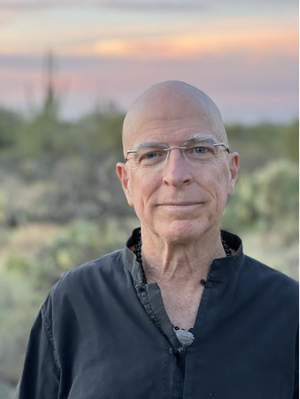
By Ronen Goddard, PhD, CCEP
Embodied awakening is the process by which spiritual insight moves from the mind into the nervous system — from understanding to actual reorganization. It’s the difference between knowing that you are not your fear response and having your body stop organizing itself around fear. One is intellectual. The other changes how you move through a room.
What is embodied awakening?
Embodied awakening is what happens when the recognition of your true nature — the awareness that you are not a separate, defended self — stops being a concept you hold and starts being something your body lives. Your nervous system literally reorganizes around a different center of gravity. The armoring softens. The chronic bracing in your chest, your jaw, your belly — the physical architecture of the defended self — begins to loosen its claim.
This is not metaphor. The body carries the pattern of who we think we are in its very structure: in the way we hold the spine, restrict the breath, brace against contact. Awakening that stays in the head leaves that structure completely untouched. The insight fades. Something just evaporates.
How is embodied awakening different from intellectual understanding?
Intellectual understanding of non-separation is common among people who have spent time in contemplative practice, therapy, or integral philosophy. You know the map. You can describe the territory fluently. And then someone cuts you off in traffic, or a partner says the wrong thing at the wrong moment, and the defended self reassembles itself in about 400 milliseconds — fully intact, entirely convincing.
That gap — between knowing and living — is what embodied awakening specifically addresses.
The body is not slow to catch up with the mind. It’s actually ahead of it. Your body already knows what your mind is still figuring out. What it needs is not more information. It needs a different quality of attention — sustained, somatic, non-conceptual — that reaches beneath the level of narrative into the places where the pattern actually lives.
In practice, this means working with the body as the primary field of inquiry, not as a vehicle for the mind’s conclusions. The question is not “What do I believe about my true nature?” The question is “What is actually organizing this body right now, and can it soften?”
What does embodied awakening feel like?
There is a moment — and people who have touched it describe it similarly — when something stops bracing. Not as a decision. Not as a relaxation technique. The defended self, for a moment, stops insisting. What’s left is spaciousness without vacancy. Aliveness without urgency. The body is still here, fully present, but the subtle armoring that was the constant low-level cost of being a defended self — that lifts.
It doesn’t stay, not at first. That’s important to say honestly. What happens over time with sustained practice is that the nervous system builds a new reference point. The defended state stops feeling like home. The open state starts to feel more like ground.
In the body, this often shows up as: breath that actually reaches the belly without effort. A sense of weight dropping into the feet. Shoulders that aren’t managing anything. A quality of presence that isn’t performing presence. These are small things. They are also the whole thing.
The three streams that make this work
The Embodied Awakening approach draws from three traditions, each addressing a different dimension of the work.
Core Energetics — developed by John Pierrakos from the work of Wilhelm Reich — maps the body’s character structures: the ways we organize our musculature, posture, and breath around early decisions about what is safe, what is lovable, what is possible. Working somatically with these structures doesn’t mean processing the past. It means meeting the pattern where it actually lives — in tissue, in breath, in posture — and creating the conditions for it to reorganize.
Kashmir Shaivism contributes the recognition practices. This non-dual tradition from the Indian subcontinent holds that consciousness is not something you attain — it’s what you already are, temporarily obscured by identification with a smaller story. The practices don’t build toward realization. They remove the obstruction to recognizing what’s already the case. We don’t just talk about false selves and true selves — we locate them in the body, in real time, and work with what we find.
Unique Self, rooted in the integral philosophy of Marc Gafni, provides the integration layer. Awakening without individuation is incomplete. You are not dissolving into formlessness — you are becoming more fully yourself, more distinctly expressed, more able to live from what is actually yours to offer. This is not the erasure of the self but the fulfillment of it.
These three streams are not kept separate in the teaching. They function as a single integrated practice: Core Energetics addresses the body’s held patterns; Kashmir Shaivism opens the recognition field; Unique Self gives that recognition somewhere to land in actual life.
Why “embodied” matters — what most retreats miss
Most retreat experiences — even very good ones — stop at insight. You arrive at something real. Something opens. And then you drive home, the kids are loud, work piles up, and by Tuesday the experience has become a memory you’re managing the loss of, rather than a change in how you actually live.
The body is the territory of daily life. If awakening doesn’t reach the body — doesn’t touch the nervous system’s fundamental orientation — it remains an event rather than a development. The work of embodied awakening is asking the body to become the territory, not just the map.
This is why residential retreat matters. Four days is not a long time, but it is long enough for real settling — long enough for the nervous system to stop orienting toward the commute home and start actually being somewhere. There are things that only happen in a room together, with enough time for real settling. That settling is not incidental. It is the work.
Is this for you?
Embodied awakening work is most relevant if you recognize yourself in some version of this: you have a sophisticated understanding of your inner life — psychologically, spiritually, philosophically — and yet the day-to-day texture of your nervous system hasn’t fully caught up. You know more than you live. The gap between the two is not ignorance. It’s unmetabolized experience living in the body.
This is not therapy. It’s not yoga. It’s not a meditation retreat where silence is the primary method. It is somatic, relational, philosophically rigorous work — experiential in method, integrated in approach — for people who are ready to close the gap between knowing and living.
Embodied Awakening Retreat — May 28-31, 2026
The next opportunity to do this work in a residential container is the Embodied Awakening retreat at Spring Forest Community in Hillsborough, NC. Eight to ten people. Four days. Lodging and plant-based meals included, plus up to five hours of group integration after we close — so nothing just evaporates.
Early bird registration is $995 through April 15.
Ronen Goddard, PhD, is a Certified Core Energetics Practitioner (CCEP) and the founder of Integral Becoming. He works at the intersection of somatic practice, integral philosophy, and psychospiritual development.