Kashmir Shaivism Recognition Practices for Beginners
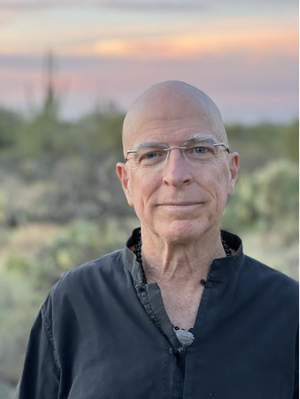
By Ronen Goddard, PhD, CCEP
What is Kashmir Shaivism?
Kashmir Shaivism is a non-dual philosophical and contemplative tradition that originated in the Kashmir valley of northern India, reaching its classical form between the 9th and 12th centuries. Its central claim is direct: consciousness — pure, aware, luminous — is the ground of all experience, and you are not separate from it. You never were. The tradition’s signature contribution is not a map of how to get there. It’s a set of practices for recognizing what was never absent.
That’s a different project than most spiritual paths offer. And the difference matters enormously.
What are recognition practices?
Recognition practices — in Sanskrit, pratyabhijña — are contemplative methods designed not to produce awakening but to reveal it. The word pratyabhijña translates roughly as “re-cognizing,” knowing again what was already known. In the logic of Kashmir Shaivism, you are not building toward realization. You are noticing that you already are what you’re looking for.
This stands most spiritual striving on its head. And it changes what the practices actually look like.
What is the difference between recognition and achievement in spirituality?
Most spiritual paths are structured as achievement paths. You meditate longer. You purify more. You accumulate merit, insight, practice hours. Progress is measured by distance traveled. Awakening sits at the far end of a long road.
Kashmir Shaivism says: you’re already there. You just don’t recognize it.
Not because the work isn’t real — the tradition has rigorous practices. But the orientation is inverted. You’re not climbing toward something. You’re removing what obscures something that was always present. The recognition traditions call these obscurations malas — the contractions, stories, and habitual fixations that make you miss what’s been here the whole time.
In practice, this means the moment of recognition can happen now. Not after years of practice. Now. That said — and this is important — most people need the practices to learn to stop long enough to let recognition happen. The meditation and body practices are not the path to awareness. They are what clears the windshield.
How to practice Kashmir Shaivism as a beginner
There is no initiation required to begin. What you need is a willingness to pay attention in a particular way.
Start with the body, not the concept. Kashmir Shaivism posits Spanda — the throb or pulse of consciousness, the vibration that underlies every sensation and experience. You don’t think your way into Spanda. You feel for it. Sit quietly and notice the aliveness in your hands. Not your thoughts about your hands. The sensation itself — the faint hum of being alive in tissue, if you get still enough to notice it. That is the beginning of recognition practice.Notice when the story weakens. There are moments — waking up slowly before full consciousness arrives, the pause after laughter, the moment right after you’ve been moved by something beautiful — when the running commentary that normally fills experience just... isn’t there for a second. You’re here, awake, present, and there’s no narrator. Kashmir Shaivism calls this a sphuratta — a flash of recognition, a sudden luminosity. The beginner practice is to notice these moments, not chase them. They’re already happening. You’re just not watching for them.
Work with sensation more than narrative. When emotion arises, most people immediately go to interpretation: why am I feeling this, what does it mean, whose fault is it. The recognition path goes the other direction — toward the raw sensation before the story. Where is it in the body? What is its texture? Does it move? This is not suppression. It is contact. And direct contact with sensation, held in awareness without interpretation, is one of the most direct routes into recognition practice.
Let awareness notice itself. This is the most subtle instruction, and also the most central. At some point, instead of looking at whatever is in your experience, you turn the attention back on what is doing the looking. Not a thought about awareness. Awareness, noticing that it is aware. This is what the Recognition Sutras of Abhinavagupta are pointing at. You cannot manufacture this. But you can stop filling every moment with content long enough for it to happen by itself.
A word about what Kashmir Shaivism is not
This is worth saying directly: Kashmir Shaivism is not the popularized “Tantric spirituality” you encounter in weekend workshops or yoga-adjacent retreats. That version — focused primarily on sexuality, energy, and what the marketing often calls “awakening your Shakti” — strips the tradition of its depth and, frankly, misrepresents it.
Classical Kashmir Shaivism, transmitted through texts like the Shiva Sutras, the Spandakarikas, and Abhinavagupta’s Tantraloka, is a rigorous philosophical and contemplative system. Its recognition practices include intense pratyahara (sense withdrawal), concentration techniques, mantra-based inquiry, and careful attention to the states between waking, dreaming, and deep sleep. It is grounded in a fully developed cosmology — the 36 tattvas, the five acts of consciousness — that can take years to understand well.
For beginners, none of that background is required to begin practicing. But it matters to know what tradition you are actually drawing from, and what you are not.
How the body changes the recognition
Here is something I’ve found in years of working at the intersection of somatic practice and non-dual recognition: the body is not incidental to this work. It is the work.
Most people encounter Kashmir Shaivism as philosophy. They read about Spanda, find it compelling, and then go home and continue to live from the same contracted, defended version of themselves they’ve always been. The gap between knowing and living this is not a philosophical problem. It’s a body problem.
Your nervous system has been organized around protection for a long time. The way your chest closes when you feel exposed. The way your breath shallows out below a certain threshold — not because of anything happening now, but because something very old learned it wasn’t safe to be fully present. Those patterns are in tissue, not in thought. And they will filter recognition. You can have a genuine recognition experience in a retreat and be back inside the familiar contraction by Tuesday.
This is why I pair Kashmir Shaivism recognition practices with Core Energetics body work. Core Energetics addresses the defensive layer — the held patterns that keep you from landing in what’s already here. The recognition practice then has somewhere to actually land.
The sequence matters: release what’s held, recognize what was always here, let the body learn to inhabit it. That’s a different arc than insight alone.
The Embodied Awakening Retreat
If you want to work with these practices in a container designed to let them actually move — not just as ideas but as direct experience — this is what I’m building.
Embodied Awakening is a four-day residential retreat at Spring Forest Community in Hillsborough, NC, May 28–31, 2026. Ten participants. Lodging and plant-based meals included. We’ll work with Kashmir Shaivism recognition practices, Core Energetics body work, and Unique Self teaching — as a single integrated arc, not three separate workshops.
The ratio is roughly 60% experiential, 25% relational, 15% teaching. I’ve also built in up to five hours of group integration after we close. Nothing just evaporates.
Early bird pricing is $995 through April 15, 2026.
If you have questions, reply to any of my newsletters or use the contact form on the site. I read everything.
Ronen Goddard, PhD, is a Certified Core Energetics Practitioner (CCEP) and the founder of Integral Becoming. He works at the intersection of somatic practice, integral philosophy, and psychospiritual development.